

ResearchInvestigación
We work on the dynamics of tropical marine systems over a range of timescales, from millions of years to the last few decades. Most of our research falls under one of the following three themes.Trabajamos sobre la dinámica de los sistemas marinos tropicales en distintas escalas de tiempo, desde millones de años hasta las últimas décadas. Casi toda nuestra investigación cae en uno de los siguientes tres temas.
Reef historical ecologyEcología histórica de arrecifes
Understanding the dynamics of coral reefs over thousands of years puts today's changes in context and exposes the mechanisms behind them. We build those long records by coring and bulk sampling fossil and modern reefs, then extracting the rich, diverse reef life preserved within the sediments. These include the remains of bony fish, sharks and rays, molluscs, urchins, algae, and, of course, the corals themselves.
We also reconstruct the environmental and ecological conditions of those reefs using isotopes bound inside skeletal carbonates, which tell us about productivity, temperature and the structure of the food web at the time.
These millennial records give ecological and environmental baselines from a time before major human impact, and as humans interacted with ecosystems.
Entender la dinámica de los arrecifes de coral a lo largo de miles de años pone en contexto los cambios actuales y revela los mecanismos detrás de ellos. Construimos esos registros largos perforando y muestreando en volumen arrecifes fósiles y modernos, y extrayendo la rica y diversa vida arrecifal preservada dentro de los sedimentos. Ahí están los restos de peces óseos, tiburones y rayas, moluscos, erizos, algas y, por supuesto, los propios corales.
También reconstruimos las condiciones ambientales y ecológicas de esos arrecifes con los isótopos atrapados dentro de los carbonatos esqueléticos, que nos hablan de la productividad, la temperatura y la estructura de la red trófica de entonces.
Estos registros milenarios aportan líneas base ecológicas y ambientales de una época anterior al gran impacto humano, y del periodo en que los humanos ya interactuaban con los ecosistemas.
Panama Paleontology ProjectPanama Paleontology Project
The Panama Paleontology Project (PPP) uses the fossil record of tropical America to follow environmental and biotic change over millions of years, to explore the drivers of past extinctions and ecological turnover in the oceans.
Since its inception 45 years ago by Jeremy Jackson, the PPP has been collecting samples of fossils from around tropical America, offering a remarkable legacy dataset to explore macroecological and macroevolutionary questions in highly biodiverse ecosystems.
El Panama Paleontology Project (PPP) usa el registro fósil de América tropical para seguir el cambio ambiental y biótico durante millones de años, y para explorar qué impulsó las extinciones y los recambios ecológicos del pasado en los océanos.
Desde su creación hace 45 años por Jeremy Jackson, el PPP ha reunido muestras de fósiles de toda América tropical, y ofrece un conjunto de datos histórico y notable para explorar preguntas macroecológicas y macroevolutivas en ecosistemas de altísima biodiversidad.
From plankton to peopleDel plancton a la gente
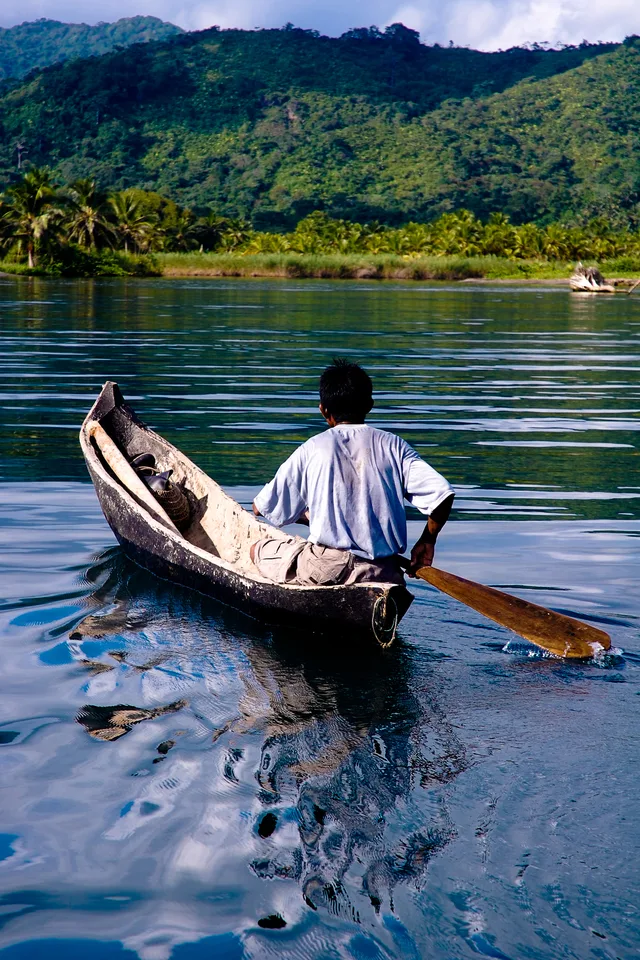
Most energy enters the sea via sunlight-fuelled phytoplankton, is transferred through food chains helping to structure ecosystems, and eventually some of it arrives on our plates in different forms. We follow that path, in the ocean today and in the historical and fossil record, exploring the links between the production of the ocean, through ecological systems, to the livelihoods of coastal communities and into global markets.
To build these links, we monitor the ocean and climate of the region, reconstruct food webs with isotopes and ecological and palaeoecological data, and, in collaboration with archaeologists and social scientists, connect these processes to how people have interacted with the sea over millennia and today.
Casi toda la energía entra al mar a través del fitoplancton, que funciona con luz solar, se transfiere por las cadenas tróficas y ayuda a estructurar los ecosistemas, y parte de ella acaba llegando a nuestros platos de distintas formas. Seguimos ese camino, en el océano de hoy y en el registro histórico y fósil, explorando los vínculos entre la producción del océano, los sistemas ecológicos, los medios de vida de las comunidades costeras y los mercados globales.
Para construir esos vínculos monitoreamos el océano y el clima de la región, reconstruimos redes tróficas con isótopos y con datos ecológicos y paleoecológicos, y, junto con arqueólogos y científicos sociales, conectamos estos procesos con la forma en que la gente ha interactuado con el mar durante milenios y hoy.
Ocean and climate with the Max Planck Institute for ChemistryOcéano y clima con el Instituto Max Planck de Química
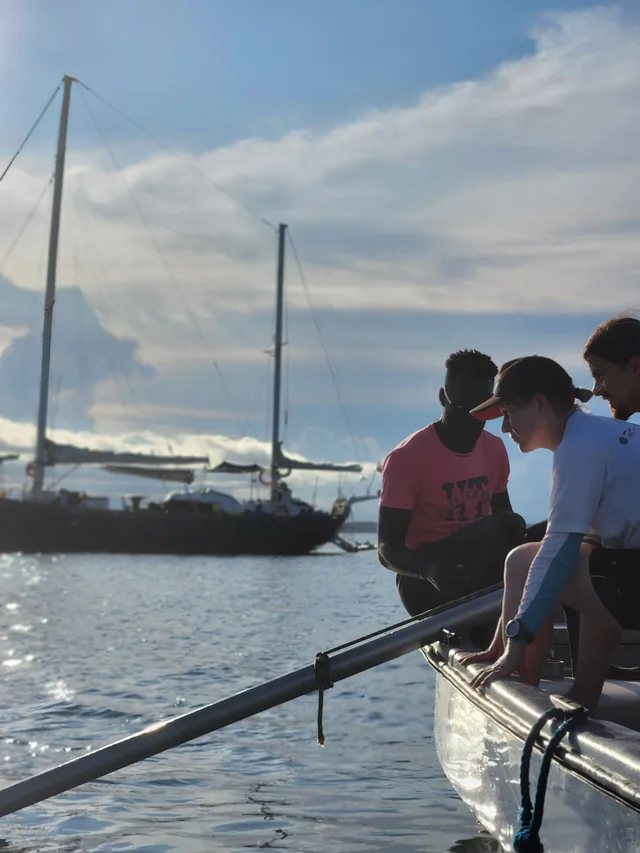
From 2023 until January 2026 the Max Planck Institute for Chemistry's research yacht Eugen Seibold was based out of STRI's Naos Marine station. Half of the yacht is laboratory, and it samples seawater, plankton and air continuously and without contamination, so it measures ocean conditions in high resolution down to 1,000 m. It worked across the tropical eastern Pacific, including the coastal upwelling systems of Panama and Costa Rica, and was key in capturing the 2025 upwelling failure. Students and fellows at MPIC and STRI are still processing samples and preparing their research findings for publication.Desde 2023 hasta enero de 2026 el velero de investigación Eugen Seibold, del Instituto Max Planck de Química, tuvo su base en la estación marina de Naos de STRI. La mitad del velero es laboratorio, y muestrea agua de mar, plancton y aire de forma continua y sin contaminación, así que mide las condiciones del océano en alta resolución hasta los 1.000 m. Trabajó por todo el Pacífico oriental tropical, incluidos los sistemas de surgencia costera de Panamá y Costa Rica, y fue clave para captar el fallo de la surgencia de 2025. Estudiantes e investigadores del MPIC y de STRI siguen procesando muestras y preparando sus resultados para publicarlos.
Where we sampleDónde muestreamos
This map shows every reef that we have cored or bulk sampled.Este mapa muestra cada arrecife que hemos perforado o muestreado.
Key funding agenciesPrincipales fuentes de financiamiento
SENACYT (SNI), the US National Science Foundation, the Smithsonian Institution, STRI and donations.SENACYT (SNI), la Fundación Nacional de Ciencias de Estados Unidos, la Institución Smithsonian, STRI y donaciones.