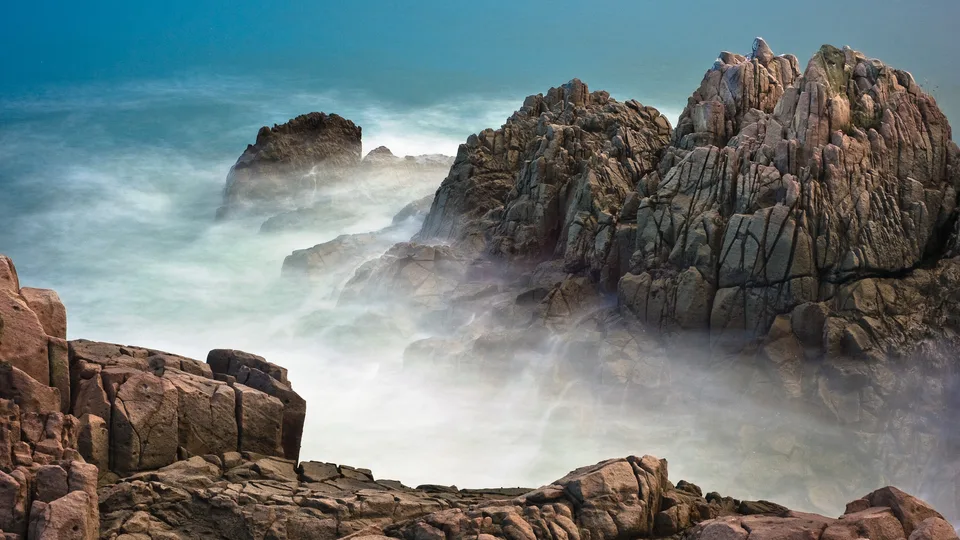
Dynamic oceansOcéanos dinámicos
Upwelling and El Niño in the Gulf of Panama, with the Max Planck Institute for Chemistry and the weekly Gulf of Panama Watch.La surgencia y El Niño en el Golfo de Panamá, con el Instituto Max Planck de Química y el Observatorio semanal del Golfo de Panamá.
The Gulf of Panama is one of the most changeable stretches of tropical ocean, because two powerful systems meet there. Every January to April the northerly trade winds funnel through the isthmus and drive cold, nutrient-rich water up into the Gulf of Panama, fuelling the plankton blooms that feed its fisheries and cooling its coral reefs. Every few years El Niño pushes warm water east across the Pacific and deepens the thermocline, so the water that does rise is warmer and poorer in nutrients.
We study how upwelling and El Niño behave, how they interact, and what happens to the ecosystems and people that depend on them when they change. In 2025 the Gulf of Panama upwelling failed for the first time in more than forty years of records, most likely because the Panama wind jet blew less often, for shorter spells and more weakly. It returned in 2026, and a strong El Niño is now building ahead of the 2027 season. We are growing the team to follow these changes as they happen, with a technician and a postdoctoral fellow in ocean dynamics.
El Golfo de Panamá es uno de los tramos más cambiantes del océano tropical, porque allí se encuentran dos sistemas poderosos. Cada año, de enero a abril, los vientos alisios del norte se canalizan por el istmo y hacen subir agua fría y rica en nutrientes al Golfo de Panamá, que alimenta las floraciones de plancton de las que dependen sus pesquerías y enfría sus arrecifes de coral. Cada pocos años El Niño empuja agua cálida hacia el este a través del Pacífico y hunde la termoclina, de modo que el agua que sí sube es más cálida y más pobre en nutrientes.
Estudiamos cómo se comportan la surgencia y El Niño, cómo interactúan y qué pasa con los ecosistemas y las personas que dependen de ellos cuando cambian. En 2025 la surgencia del Golfo de Panamá falló por primera vez en más de cuarenta años de registros, probablemente porque el chorro de viento de Panamá sopló con menos frecuencia, en episodios más cortos y con menos fuerza. Regresó en 2026, y ahora se forma un fuerte El Niño antes de la temporada de 2027. Estamos ampliando el equipo para seguir estos cambios a medida que ocurren, con un técnico y un investigador posdoctoral en dinámica oceánica.
Ocean and climate with the Max Planck Institute for ChemistryOcéano y clima con el Instituto Max Planck de Química
From 2023 until January 2026 the Max Planck Institute for Chemistry's research yacht Eugen Seibold was based out of STRI's Naos Marine station. Half of the yacht is laboratory, and it samples seawater, plankton and air continuously and without contamination, so it measures ocean conditions in high resolution down to 1,000 m. It worked across the tropical eastern Pacific, including the coastal upwelling systems of Panama and Costa Rica, and was key in capturing the 2025 upwelling failure. Students and fellows at MPIC and STRI are still processing samples and preparing their research findings for publication.Desde 2023 hasta enero de 2026 el velero de investigación Eugen Seibold, del Instituto Max Planck de Química, tuvo su base en la estación marina de Naos de STRI. La mitad del velero es laboratorio, y muestrea agua de mar, plancton y aire de forma continua y sin contaminación, así que mide las condiciones del océano en alta resolución hasta los 1.000 m. Trabajó por todo el Pacífico oriental tropical, incluidos los sistemas de surgencia costera de Panamá y Costa Rica, y fue clave para captar el fallo de la surgencia de 2025. Estudiantes e investigadores del MPIC y de STRI siguen procesando muestras y preparando sus resultados para publicarlos.
Gulf of Panama WatchObservatorio del Golfo de Panamá
The upwelling measured week by week, with a new deep station southwest of Las Perlas to follow the deep water as El Niño grows.La surgencia medida semana a semana, con una nueva estación profunda al suroeste de Las Perlas para seguir el agua profunda mientras crece El Niño.