Javier Pardo Díaz

Lab Manager

I am a marine biologist and limnologist interested in the evolution, ecology, and resilience of tropical marine ecosystems. My research integrates modern ecological monitoring with the fossil record to understand how environmental change has shaped biodiversity and trophic structure through time.

At the Smithsonian Tropical Research Institute (STRI), I serve as Laboratory Manager of the O’Dea Lab in the Paleobiology and Marine Historical Ecology Group. I first joined STRI’s Physical Monitoring Program, contributing to long-term oceanographic and water-quality monitoring of Panama’s mangrove and coastal ecosystems. As a certified scientific diver (AAUS, Rescue & Nitrox), I conduct underwater fieldwork that complements my laboratory research on coral reefs and fossil assemblages.

Currently, within the Panama Paleontology Project, I focus on the analysis of fossil shark teeth from the Miocene Gatun Formation. My work aims to reconstruct ancient trophic networks and tentative nursery areas to discover the ecology of the formation 10 to 7 mya. I also work on modern communities, identifying changes driven by climatic events such as marine heatwaves and ocean acidification, to better understand how coral reef ecosystems respond to environmental stress. This approach helps identify ecological baselines to guide tangible and practical conservation efforts.

Beyond research, I am passionate about science communication and ocean advocacy. I have represented Panama in international forums such as the Our Ocean conference and Immersed in Change. I collaborate with Sustainable Ocean Alliance Panama to engage young people in marine conservation. My goal is to bridge marine biology and conservation paleobiology to better understand the past and protect the future of tropical oceans.

Heather Donnelly

STRI FELLOW

I am a PhD candidate in Dr. Xingchen (Tony) Wang Stable Isotope Biogeochemistry Lab at Boston College. My research aims to understand nitrogen cycling within corals and coral reefs as well as how anthropogenic influences and climate change affect nitrogen cycling in these systems by using stable isotopes. During my fellowship at the O’Dea lab, I will utilize the isotopic composition (δ15N) of organic nitrogen bound within coral skeleton that has recently been utilized to detect symbiosis in ancient corals. The basis of this proxy is that symbiotic corals are expected to exhibit lower δ15N compared to their non-symbiotic (aposymbiotic) counterparts due to internal nitrogen recycling, and this δ15N signal is preserved in coral skeleton. Yet, robust field studies are still needed to groundtruth its application in natural settings. I aim to exploit Panama’s unique collection of modern and fossil corals to rigorously test the δ15N symbiosis proxy. The findings are expected to shed light on the future of coral symbiosis in the face of intensifying climate change.

Sven Pallacks

STRI FELLOW

Recently, I have completed my PhD at the Autonomous University of Barcelona in Spain. During my doctoral studies, I have investigated the effects of ocean warming, acidification and deoxygenation on the Mediterranean ecosystem, by reconstructing plankton and mesopelagic fish dynamics beyond the temporal scale of instrumental records. With the STRI short-term fellowship, I would like to build on my PhD research, and further investigate the impacts of ongoing ocean deoxygenation on mesopelagic fish energetics. To do so, I am using their otoliths (ear-stones) which accumulate on the seafloor after they die. Comparing otolith morphometry and chemistry from either site of the Isthmus of Panama allows me to determine if mesopelagic fish body size, growth and habitat depth is affected in oxygen deprived waters, such as the pronounced Oxygen Minimum Zone off the coast of Panama in the Pacific Ocean. My research is driven by a fascination of these tiny, often overlooked but incredibly important fish, as they play a vital role in ocean food webs, carbon cycling and sustaining aquacultures.

Adrián Despaigne Cooke

vOLUNTEER

Soy Adrián Despaigne Cooke. Un joven panameño interesado en la paleontología marina, sobre todo los restos fósiles de tiburones. Desde siempre me ha parecido peculiar la geología, particularmente la formación de fósiles y su composición, llegando incluso a obtener el apodo de “piedrero” algunas veces debido a mi costumbre de recolectar piedras. Igualmente la biología animal me fascina, particularmente la biología de los animales marinos. Es por eso que soy voluntario en el O’Dea lab, un laboratorio centrado en mejorar el entendimiento de cómo la vida cambia a través del tiempo.

Samuel Rivera

RaMP-UP Fellow

I recently graduated from the University of California, Los Angeles with a B.S. in Ecology, Behavior, and Evolution and a minor in Geographic Information Systems and Technology. I have a broad interest in marine systems and especially enjoy working with coastal invertebrates. My past research has been in better understanding the use of macroalgae as a food source and habitat on sandy beaches and the spatial distribution patterns of invertebrates. In the O’Dea lab, I will be working with Sacoglossans, which are sea slugs that can obtain energy from photosynthesis through the chloroplasts they consume from algae. I will be working with Kim Garcia to achieve a better understanding of how this trophic strategy, known as kleptoplasty, impacts the life histories of these organisms and how different environmental conditions can affect this strategy as well. In my free time, I enjoy going on hikes and runs, and love to draw and paint.

Me gradué recientemente de la Universidad de California en Los Ángeles con una licenciatura. en Ecología, Comportamiento y Evolución con mención en Sistemas de Información Geográfica y Tecnología. Estoy interesado generalmente en los sistemas marinos y especialmente disfruto trabajando con invertebrados costeros. Mis investigaciones anteriores han consistido en comprender mejor el uso de macroalgas como fuente de alimento y hábitat en playas arenosas y la distribución espacial de los invertebrados. En el laboratorio del Dr. O’Dea trabajaré con los sacoglosos, que son un grupo de babosas marinas que pueden obtener energía por medio de la fotosíntesis usando los cloroplastos que consumen de las algas. Trabajaré con Kim García para lograr entender mejor cómo esta estrategia trófica, conocida como cleptoplastia, impacta las historias de vida de estos organismos y también cómo diferentes condiciones ambientales pueden afectar esta estrategia. En mi tiempo libre, disfruto hacer caminatas y correr, y me encanta dibujar y pintar.  

Andrea Bogantes

STRI INTERN

Soy estudiante de maestría en Biología en la Universidad de Costa Rica. Me interesa investigar cómo se comportaban los ecosistemas marinos antes de los impactos antropogénicos a través de la paleoecología y la ecología histórica, además de la comunicación de la ciencia. Actualmente, mi investigación de tesis se centra en la reconstrucción paleoecológica de los arrecifes coralinos de Bahía Culebra, Guanacaste. El objetivo principal es describir los cambios temporales en la composición del ensamblaje arrecifal en tres zonas distintas.

Durante mi estancia en el laboratorio de O’Dea, tendré la oportunidad de trabajar procesando núcleos para identificar fósiles coralinos, procesando otolitos de peces para ampliar la colección de referencia y asistiendo en general en el laboratorio.

I am a Master’s student in Biology at the University of Costa Rica. I am interested in studying how marine ecosystems behaved before anthropogenic impacts through paleoecology and historical ecology, as well as in science communication. Currently, my thesis research focuses on the paleoecological reconstruction of the coral reefs of Bahía Culebra, Guanacaste. The main objective is to describe temporal changes in the composition of the reef assemblage in three different areas. During my stay at the O’Dea lab, I will have the opportunity to work on processing cores to identify coral fossils, processing fish otoliths to expand the reference collection, and generally assisting in the lab.

María Mercedes Gómez

STRI INTERN

Soy María Mercedes Gómez, estudiante de biología en la Escuela Superior Politécnica del Litoral (ESPOL). Nacida en Guayaquil, Ecuador, siempre he estado fascinada con la biodiversidad y la paleontología de vertebrados. Mis primeros recuerdos incluyen pasar mañanas completas buscando peces y equinodermos en las piscinas de marea de la playa de Ballenita, Santa Elena, y explorando los manglares del Parque Histórico Guayaquil.

Tengo experiencia en microbiología de extremófilos, micología y biología de la vida salvaje. He sido voluntaria en el Parque Nacional Galápagos en el cuidado de tortugas gigantes y he trabajado en el Centro de Investigaciones Biotecnológicas del Ecuador (CIBE) en la bioprospección de bacterias antárticas. Durante mi estancia en O’Dea Lab, estaré trabajando con dentículos de tiburones fosilizados para entender los patrones de abundancia de sus poblaciones ancestrales.  Mis otros intereses de investigación son la paleontología, el comportamiento animal y la biomecánica. En el futuro, busco especializarme en paleobiología de dinosaurios terópodos.

I’m María Mercedes Gómez, a student of biology at Escuela Superior Politécnica del Litoral (ESPOL). Born in Guayaquil, Ecuador, I’ve always been fascinated by nature and vertebrate paleontology. My earliest memories include spending whole mornings searching for fish and echinoderms in the tide pools of Ballenita Beach, Santa Elena, and exploring the mangroves at Parque Histórico Guayaquil.

I’m experienced in extremophile microbiology, mycology, and wildlife biology. I have volunteered for the Galápagos National Park in the caretaking of giant tortoises and worked at Centro de Investigaciones Biotecnológicas del Ecuador (CIBE) in the bioprospection of Antarctic bacteria. During my stay at O’Dea Lab, I will be working with fossil shark denticles to understand the abundance patterns of their ancient populations. My other research interests are in paleontology, animal behavior, and biomechanics. In the future, I seek to specialize in the paleobiology of theropod dinosaurs.  

Lucía Morales

STRI INTERN

¡Hola! Soy estudiante de biología marina en la Universidad Marítima Internacional de Panamá y estoy interesada en la ecología marina, especialmente en la ecología trófica y el desarrollo de las especies hermanas de peces arrecifales en ambos lados del Istmo de Panamá.

Mi interés de investigación se enfoca en comprender cómo un par de especies de peces hermanas se desenvuelven en entornos marinos con diferentes niveles de producción planctónica. Utilizaré isótopos estables y otolitos (pequeñas estructuras en sus oídos) para rastrear cambios en su nicho trófico durante la etapa juvenil y evaluar cualquier alteración en su tasa de crecimiento a lo largo de su vida mediante el análisis de los aros de crecimiento en sus otolitos. En esencia, busco entender cómo este par de especies hermanas responde a variaciones ambientales y cómo evoluciona en términos de alimentación y desarrollo con el tiempo.

Por otro lado, como bióloga de campo, mi verdadera pasión se encuentra en el océano. La inmersión en el campo marino y la experiencia de estar rodeada por la vastedad del mar despiertan mi curiosidad. Me encanta compartir estas experiencias, especialmente con aquellas personas que no han tenido la oportunidad de conocer el océano o que le tienen temor. Para mí, difundir el conocimiento y la fascinación que siento por el mundo marino es tan gratificante como sumergirme en sus aguas.

Estephany Martínez

STRI VOLUNTEER

Soy Estephany Martínez, voluntaria de STRI. Nacida en la provincia de colón, actualmente tengo 24 años, participo en el laboratorio dirigido por el Sr. Aaron O’DEA. Mi color favorito es el verde, respeto el ciclo de vida de los seres vivos, aunque llore en el proceso, soy amante de la naturaleza, la respeto y todo lo que ella conlleva, plantas, animales y lo que nos ofrece y que debemos proteger. Me gustan los deportes en especial el futbol y me encanta la comida (sobre todo la que no es sana). Soy estudiante de administración marítima y portuaria con aspiraciones a estudiar ciencias para convertirme en veterinaria, creo que el esfuerzo es el primer paso hacia la realización de metas y logros.

Irene García

STRI INTERN

Soy estudiante de las licenciaturas en Biología Marina y Sociología en la Universidad Marítima Internacional de Panamá y la Universidad de Panamá, respectivamente. Estoy interesada en investigar las complejidades de la relación humano-naturaleza a través del tiempo. Profundizando en el cómo han cambiado nuestras formas de relacionarnos con la naturaleza y los impactos que ha dejado detrás esos cambios de paradigmas.

Actualmente trabajo en mis propuestas de tesis. Desde Biología Marina me gustaría comparar los cambios en las comunidades de tiburones arrecifales entre el período en que se registran las primeras evidencias de explotación pesquera en la Zona Central del Pacífico panameño (hace aproximadamente 7,000-4,500 años antes del presente) y el tiempo actual. Busco determinar las diferencias en la estructura trófica de estás comunidades entre los dos tiempos, además quisiera contrastar estos resultados con evidencia arqueológica, histórica y paleontológica para explorar la relación entre formas de explotación capitalista y los impactos a los ecosistemas de arrecife. Está información permitiría aproximarnos a los efectos que puede suponer la sobreexplotación de las poblaciones de tiburones para las dinámicas tróficas que se dan en estos ecosistemas arrecifales. De esta forma espero estar un paso más cerca a responder la pregunta acerca de ¿Qué cambios pudo provocar a los ecosistemas de arrecife, los cambios en nuestros medios de producción?

Actualmente soy asistente en el O’Dea Lab en el Proyecto de “Fossil dermal denticles of coral reef shark community”. Generalmente me encargo de tareas como tamizar, procesar las muestras con ácido acético y buscar dentículos en las muestras de sedimento. Mediante esta metodología se determina la abundancia de dentículos en el sedimento y se contrasta con datos de abundancia de otolitos, después de un análisis estadístico riguroso, poco a poco ir respondiendo a la pregunta ¿Cuáles eran los niveles básicos de abundancia de tiburones y su función ecológica en los arrecifes de coral antes de los humanos?

Andrew Sellers 

STRI FELLOW

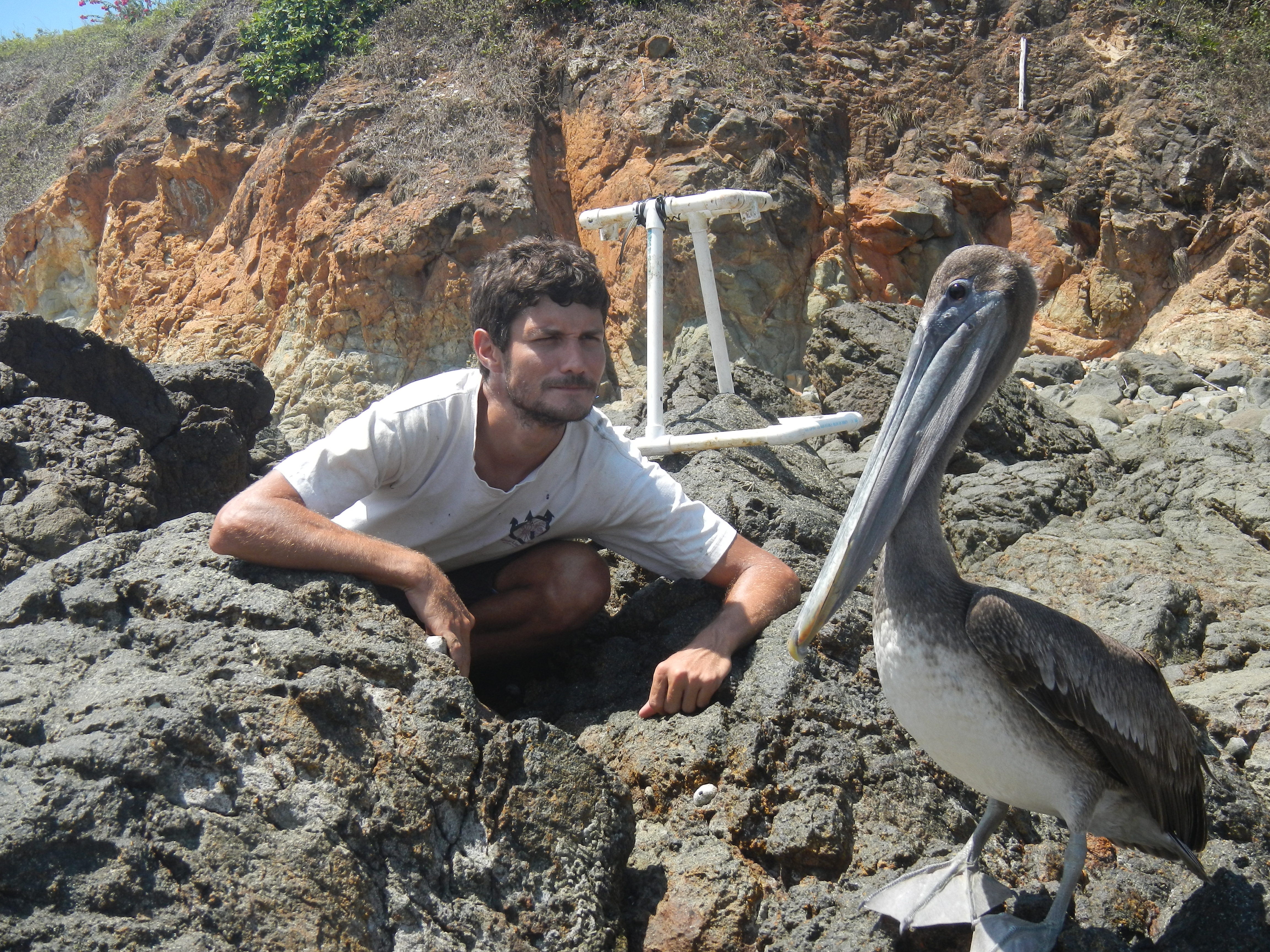
As a marine ecologist I study how marine predators and herbivores shape coastal ecosystems, and how those species interactions are influenced by changes in environmental conditions imposed by oceanographic processes. In particular, I focus on wind-driven upwelling events which allow the rise of cold, nutrient-rich water from the ocean’s depths to shallow coastal ecosystems. Seasonal variation in surface temperatures and food-availability generated by upwelling events can alter the strength of predation and herbivory. I rely on experimental manipulations of fish to study how consumer pressure on reef associated algae and sessile invertebrates varies along upwelling gradients along the Pacific coast of Panama and Costa Rica. My favorite animals is the pelican.  

Como ecólogo marino, estudio cómo los depredadores y herbívoros marinos dan forma a los ecosistemas costeros, y cómo esas interacciones entre especies se ven influenciadas por los cambios en las condiciones ambientales impuestas por los procesos oceanográficos. En particular, me centro en los fenómenos de surgencia impulsados ​​por el viento que permiten el ascenso de agua fría y rica en nutrientes desde las profundidades del océano hasta los ecosistemas costeros. La variación estacional en las temperaturas de la superficie y la disponibilidad de alimentos generada por los eventos de surgencias pueden alterar la fuerza de la depredación y la herbivoría. Me baso en manipulaciones experimentales de peces para estudiar cómo la presión de los consumidores sobre las algas e invertebrados sésiles asociados a los arrecifes varía a lo largo de los gradientes de surgencia a lo largo de la costa del Pacífico de Panamá y Costa Rica. Mi animal favorito es el pelícano.

Paige Gardner

STRI Intern

Hello! I am thrilled to be returning to Panama to work with the O’Dea lab. I am studying fish movement and invasion in the Panama Canal using otolith geochemistry. I am interested in using stable isotopes to better understand the movement of marine fishes into the freshwater Lake Gatun. I hope to be able to use my research to inform fisheries conservation plans and gain a better understanding of the processes underlying natural phenomena.

I graduated from Washington State University in May 2022 with a BSc in Biology and a minor in Environmental Sciences. I will be attending University of California Santa Cruz in Fall 2023 to begin my PhD in Ecology and Evolutionary Biology.

Favorite organisms: Arctic Grayling Trout, Mobular Ray.

Kyawt Aye

STRI Fellow

I am a PhD student in palaeoceanography and palaeoecology at the University of Hong Kong. I work with microscopic fossils called ostracods to understand how tropical shallow-marine biodiversity in the Caribbean evolved within the last 10 million years. Having an understanding of how tropical marine ecosystems behaved in the past can help acknowledge the possible tipping point of future tropical diversity crises against a changing climate. During my fellowship at the O’Dea lab, I will make progress in processing the Panama Palaeontology Project samples and undertake fieldwork in different areas of Panama. Using these samples, I hope to explore the patterns of origination, extinction, diversity, and faunal change of ostracods within the environmental record of the Isthmus of Panama.

Elizabeth wallace

STRI INTERN

Hello! In the O’Dea Lab, I will be working on assessing ontogenetic diet changes in Megalodon sharks. To do this, I will be working with postdoc Jess Lueders-Dumont to measure nitrogen isotopes in fossil Megalodon teeth from sharks of different life stages in order to determine if the trophic level of these sharks changed throughout their lifetime. In general, some of my favorite science topics include stable isotopes, gelatinous zooplankton, and baby marine animals.

Teresa Peil

STRI Intern

I am currently in my Master for marine biology at the University of Rostock. As part of my master’s thesis I got the opportunity to do an internship at STRI in the O’Dea lab. I will do my master’s thesis in the Eco-Evolutionary Interactions Group at the Max-Planck Institute for Marine Microbiology in Bremen for which I will do the fieldwork in Panama.  I will collect clams at both sides of the Panama Isthmus to investigate the evolution of symbiotic interactions between Microbes and Lucinid clams. The main goal will be the development of these lucinid clam shells as a marker for microbial nitrogen fixation of symbionts. For further studies I will also collect and look into existing fossil records to get a grasp of the changes before, during and after the closure of the Isthmus. I am very interested in ecological evolutionary processes and I love searching for fossils.