Research in our lab centres around understanding the dynamics of tropical marine biological systems over a variety of temporal and spatial scales.
Most of our work falls under one of the following themes:
Reef historical ecology
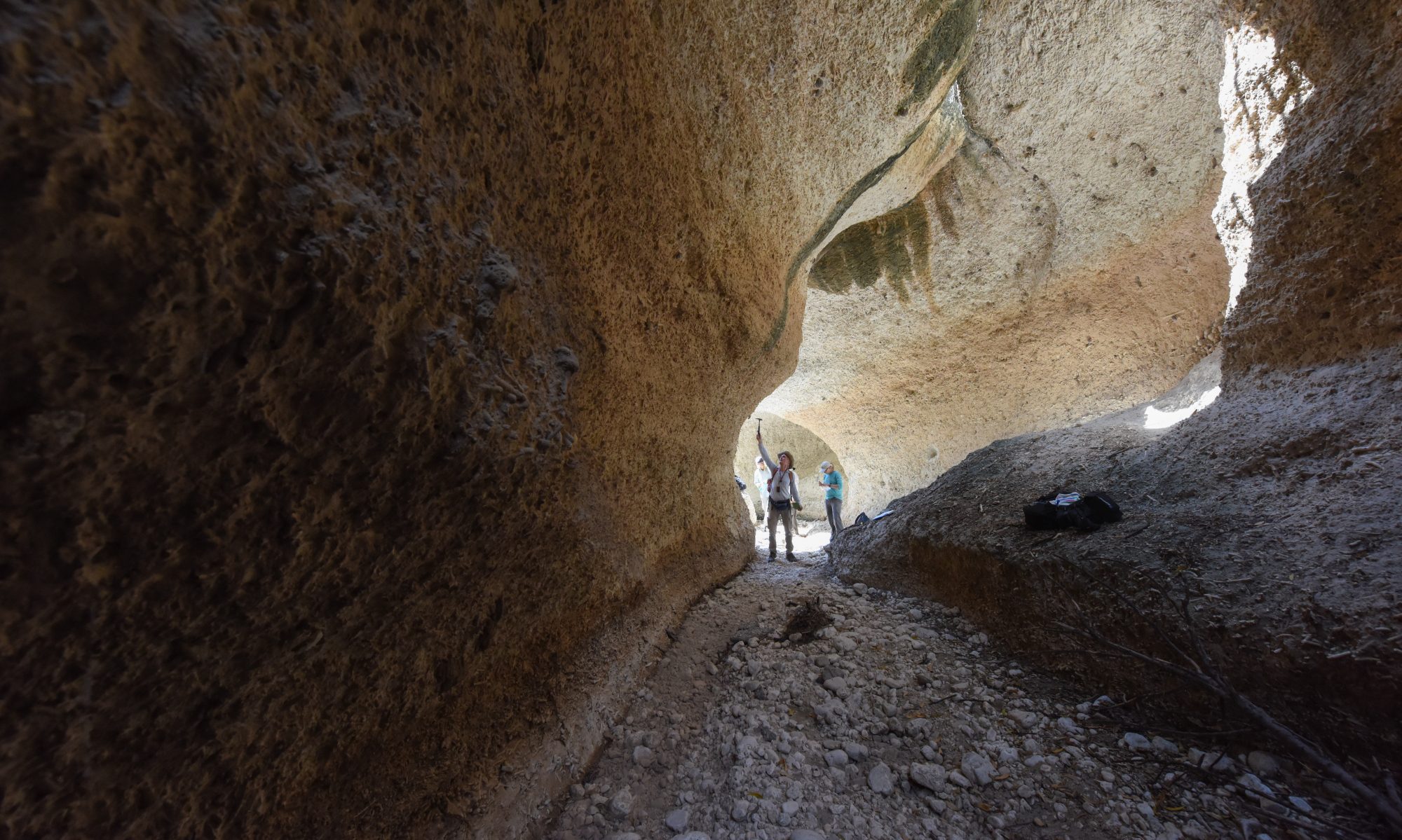
Understanding the long-term dynamics of coral reef ecosystems helps place modern changes into historical context and reveal ecological processes. We build long-term records of ecological change on reefs by coring or bulk sampling fossil and modern coral reefs and extracting the remains of vertebrates (bony fish, sharks and rays) and invertebrates (mostly corals, molluscs and urchins). Sampling locations can be viewed on this Storymap.
We also characterise the environmental and ecological conditions using carbonate-bound isotopes. The sampling network of reefs we have worked on can be viewed here.
These millennial-scale records provide pre-human baselines, reveal the timing of ecosystem change in relation to historical human impacts, and help better understand the combined effects of climate change and human exploitation on reef health.
This work is currently funded by SENACYT (SNI) and donations.
Panama Paleontology project

The Panama Paleontology project (PPP) seeks to use the rich fossil record of Tropical America to explore environmental changes over millions of years, the drivers of past extinctions, and how the modern oceans and their life originated.
This work is currently funded by NSF, Smithsonian Institution, STRI and the SENACYT (SNI). Projects are in collaboration with Jill Leonard-Pingel, Seth Finnegan, Adiel Klompmaker, Sean Connolly, Amanda Godbold, Jonathan Todd and Kenneth Johnson, and many researchers who have contributed to the PPP over the years (See the PPP’s Google Scholar)
From Plankton to People

We study energy flows through marine ecosystems and their connections to human communities, both in modern and historical contexts.
Our current research combines multiple approaches. We characterise ocean and climate systems, including collaborations with the Max Planck Institute for Chemistry aboard the Eugene Seibold. We reconstruct food web dynamics using isotope analysis and ecological and paleoecological methods, while partnering with archaeologists to understand how human consumption of marine resources has changed over millennia of changes.
This research aims to helps us understand the relationships between climate, human activities and marine ecosystem productivity and stability. These insights are crucial for addressing modern challenges in food security, human welfare, and the conservation of tropical marine biodiversity.
 O'Dea Lab
You must be logged in to post a comment.